
Pasadena Previous Residents by Era
Previous residents research in Pasadena starts by matching the question to the era. The Harris County appraisal roll offers a tax-year parcel clue. The County Clerk’s real-property portal carries the modern recorded-instrument route, while older books and indexes move to state archives. Directories and census schedules add household evidence rather than title evidence. None is a complete roster of everyone at an address. Build a dated trail, identify the role attached to each name, and preserve the legal description when a street address stops working.
| Source | Years It Covers | Where Held | What It Shows |
|---|---|---|---|
| HCAD appraisal roll | Selected tax years, not a verified occupancy run | HCAD Quick Search and Advanced Search | Account, situs, owner display, legal description, values, and tax-year clues |
| Harris County Clerk real property | Images available from 11/1/1960 | County Clerk real-property portal and copy route | Recorded parties, instrument details, legal description, and image status |
| Harris County deed books and indexes | 1837–1886 | Texas State Library and Archives Commission reels | Direct and reverse indexes, deed volumes, and reel references |
| Harris County tax rolls | 1837–1910 | TSLAC and FamilySearch digitization lead | County tax listing, which is not proof of residence |
| Pasadena city directories | 1948–1951 confirmed example | Pasadena Public Library and Ancestry Library Edition | Dated subscriber or household clues, subject to edition limits |
| Federal population census | 1790–1950 | National Archives and digitization partners | Household relationships and enumeration or dwelling context |
Begin with HCAD for a recent parcel description, then follow the recorded chain for ownership roles. For a household question, bring that address into the library directory and census sequence. Older material needs an archive, library, or state-reel route rather than a promise from the modern portal. That split is central to tracing past residents honestly.
Pasadena Previous Residents Parcel Clues
HCAD Quick Search accepts an account number, address, or owner name. It can return the tax year, account, situs address, owner display, mailing address where shown, subdivision or neighborhood, legal description, values, exemptions, jurisdictions, and a GIS connection. Search the address in more than one tax year and compare the property type, unit, lot, block, and account status. A mismatch can be a lead for the County Clerk, not evidence that someone moved on the appraisal update date.
HCAD is an appraisal office, not an abstract or title office. Its owner display is a clue, not proof of title or of who lived at the property. Mailing and situs addresses can differ, and an account can predate GIS mapping. The help material also flags zero or unknown street numbers, street-format differences, and mapping timing as causes of a missed search. Preserve the legal description because an older recorded instrument may not use the current street address.
Note: A homestead indicator and an appraisal owner display have narrow field meanings and should not be treated as a complete household history.
Trace Pasadena Previous Residents
The backward deed chain is a chain of recorded transactions, not a list of every past resident. Start with the current HCAD account and legal description. In the Harris County Clerk Real Property search, look for the likely current grantee and the same legal description. Record the file or instrument number, recording date, document date when shown, instrument type, grantor, grantee, trustee, volume or page, and image status. The grantor on one transfer can become the next earlier grantee when the description matches.
- Write down the current tax year, account, situs address, legal description, subdivision, owner display, and parcel or GIS reference from HCAD.
- Search the Clerk’s index by the legal description and likely current grantee, using lot, block, unit, volume, page, or date filters where needed.
- Record the latest instrument and read any earlier conveyance reference before searching the prior grantor as an earlier grantee.
- Repeat backward with spelling variants and the same legal description, keeping liens, releases, trustees, foreclosures, and assignments separate from transfer deeds.
- When the online record stops, move to TSLAC direct and reverse indexes, Harris County Archives research, or older deed books and preserve the reel, volume, and page.
- Grantor
- The party conveying an interest in a recorded instrument. That role does not by itself identify an occupant.
- Grantee
- The party receiving an interest in the recorded instrument. A grantee may be a person, entity, trust, or estate.
- Chain of title
- A sequence of recorded transfers connected by the same property description and documentary references.
- Legal description
- The lot, block, unit, subdivision, tract, or similar property description used to match a parcel when its street address changes or is absent.
Pasadena Previous Residents Before 1960
The County Clerk portal states that recorded images are available from November 1, 1960. A free registered account is required to view or print unofficial watermarked images, and copy or certified-copy choices have separate charges. The public database is a convenience index rather than the official repository, images can lag recording and indexing, and some instruments are redacted. A no-image result does not end the search. Keep the index citation and use the Clerk’s copy-order or public-records route when a record is needed.
For older property research, the TSLAC Harris County inventory identifies deed records from 1837 through 1886, direct and reverse indexes, and reel numbers. It also identifies probate, naturalization, land-commissioner, and tax material. TSLAC describes on-site and library interlibrary-loan routes, with some FamilySearch digitization. Harris County Archives offers appointment research for permanent records and appraisal material identified by county records management as 1895–1997 and not online.
The TSLAC Harris County reel inventory is the verified archival route beyond the modern deed-image window.
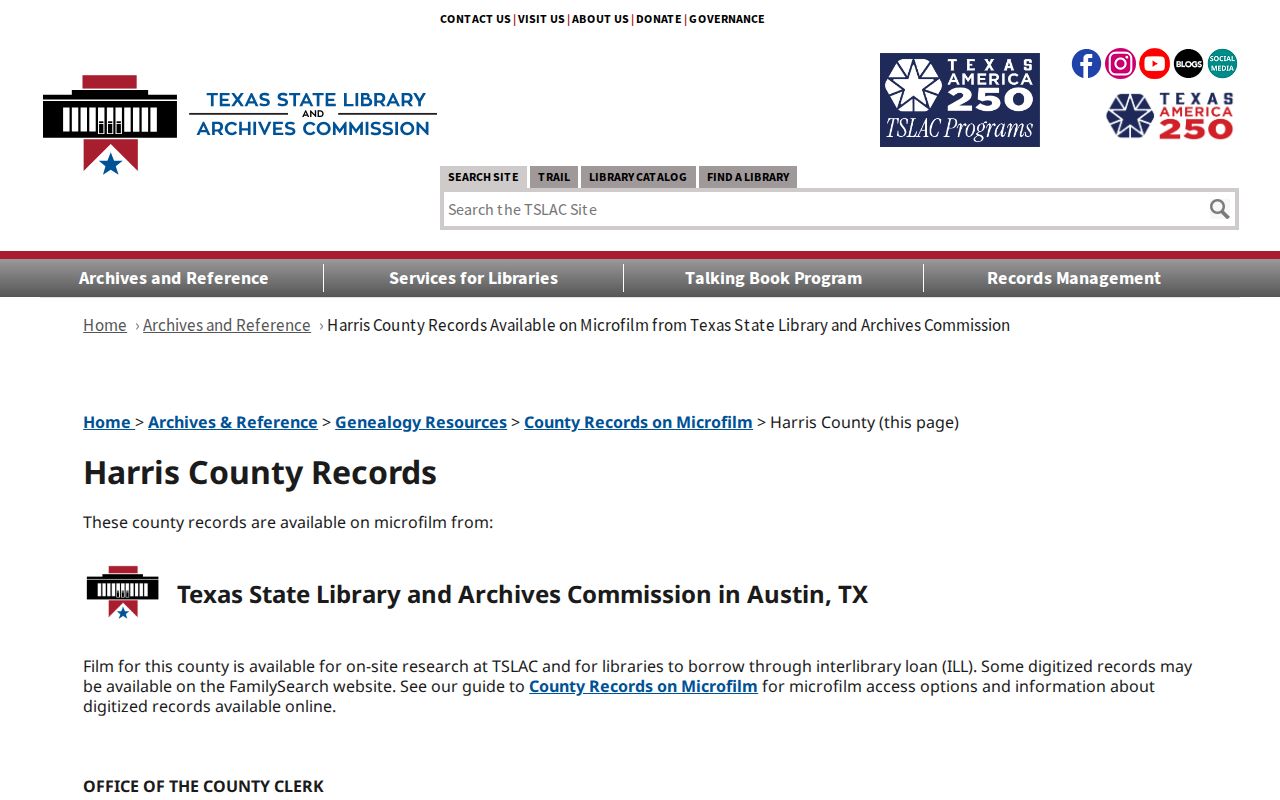
Record the reel and volume reference along with the legal description so another researcher can return to the same historical index.
Past Pasadena Households in Directories
Past residents are often found in records that describe a household rather than a property transfer. Pasadena Public Library staff can search historic city directories, with 1948–1951 named as a verified example. Historic volumes are available through Ancestry Library Edition inside the library. A directory can list a telephone subscriber, householder, business, street address, or shorthand residence mark. It is a dated snapshot. A recorded deed may name an owner who did not appear in the directory, while the directory may name someone who was not a recorded owner.
Use this household flow: directory edition and street form → nearest available census year → household relationships and enumeration detail → deed, probate, or tax record to test property roles. The National Archives makes federal population censuses public through 1950 under its 72-year restriction. Census entries can provide relationships, work information, and dwelling context. The collections and their edition limits are detailed in the Pasadena city directory.
Do not assume a criss-cross section exists. Reverse address access depends on the edition and its database indexing. Compare adjacent available editions and preserve each date separately instead of turning a gap into an assumed continuous stay.
Pasadena Previous Residents and Maps
Historical maps can place a building and street in context, but the research did not verify Pasadena Sanborn sheet years, sheet numbers, dates, or coverage. The Library of Congress Sanborn collection is the source to test before citing a specific map. Texas State Library map search also returns a city map covering Pasadena and nearby Harris County places, but its date, scale, and sheet must be recorded before it is used as evidence.
There is also no verified Pasadena street-renumbering schedule, municipal address crosswalk, or citywide historic-address index in the reviewed open sources. Keep old and current street spellings beside the legal description. When a modern address fails in a historical directory or deed index, test the subdivision, lot and block, old street form, census enumeration context, city maps, and parcel geography instead of guessing that the numbers were renumbered.
Pasadena’s boundaries, postal labels, HCAD parcel layers, voting precincts, and neighborhood names are different geographies. A mismatch points to the next custodian to check; it does not by itself make one address wrong.
Note: Map and postal sources clarify context, but a dated deed, directory, census, or official parcel field is stronger household evidence.
Pasadena Previous Residents Roles
Separate each name from the role that produced it. That prevents a recorded party or a tax-mail recipient from being turned into a claim about prior residence. The same address can appear in an appraisal record, a deed, a directory, a census, a permit, and a probate file, but the fields have different purposes. Label the source date and field meaning next to every name.
| Appraisal owner display | A tax-year ownership clue, not a title decision and not a household roster. |
|---|---|
| Grantor or grantee | A legal role in a recorded instrument, which can include an entity, trust, estate, trustee, or lender. |
| Directory subscriber or householder | A printed directory role for that edition, which may not include every person at the address. |
| Census household member | A person enumerated with a household on the census date, subject to the census record’s address and field limits. |
| Permit participant | An applicant, representative, owner, or project contact, not a statement of residence. |
County Clerk probate and older tax records can help around an estate or a property transfer. A tax-roll listing is not proof that a person lived at the address. Use a second independent dated source before describing a household connection.
Pasadena Local-History Places
The Pasadena Public Library history traces the collection from Pasadena High School in 1922 to City Hall in 1939, Mrs. Ola Mae Kennedy’s home in 1941, and the Minerva Street branch in 1962. Those moves are not proof of a property’s history, but they help explain why a historical question may require library staff or an in-library database rather than a general web search. The library also points researchers to HeritageQuest, Fold3 Library Edition, directories, census records, and newspaper resources.
The Pasadena Public Library’s institutional history provides the local context for its historical research collections.
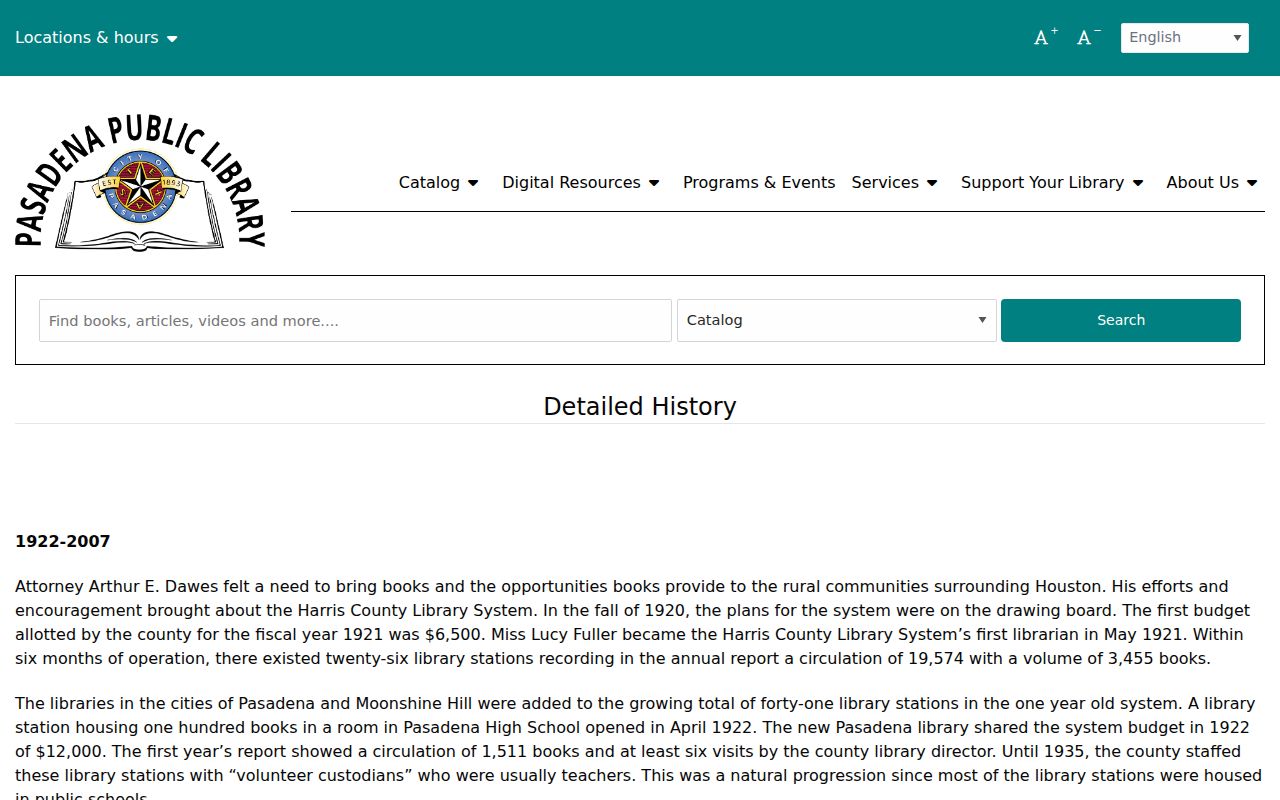
Use library staff assistance and the confirmed in-library directory access when the search calls for a dated household snapshot.
Pasadena Museum and Heritage Park offers local-history interpretation from native inhabitants through the mid-20th century, including the Pomeroy, Strawberry, Miss Anna, and Edna houses. These historic-house leads can add physical and family context after a directory, deed, census, or map establishes the date and address connection.
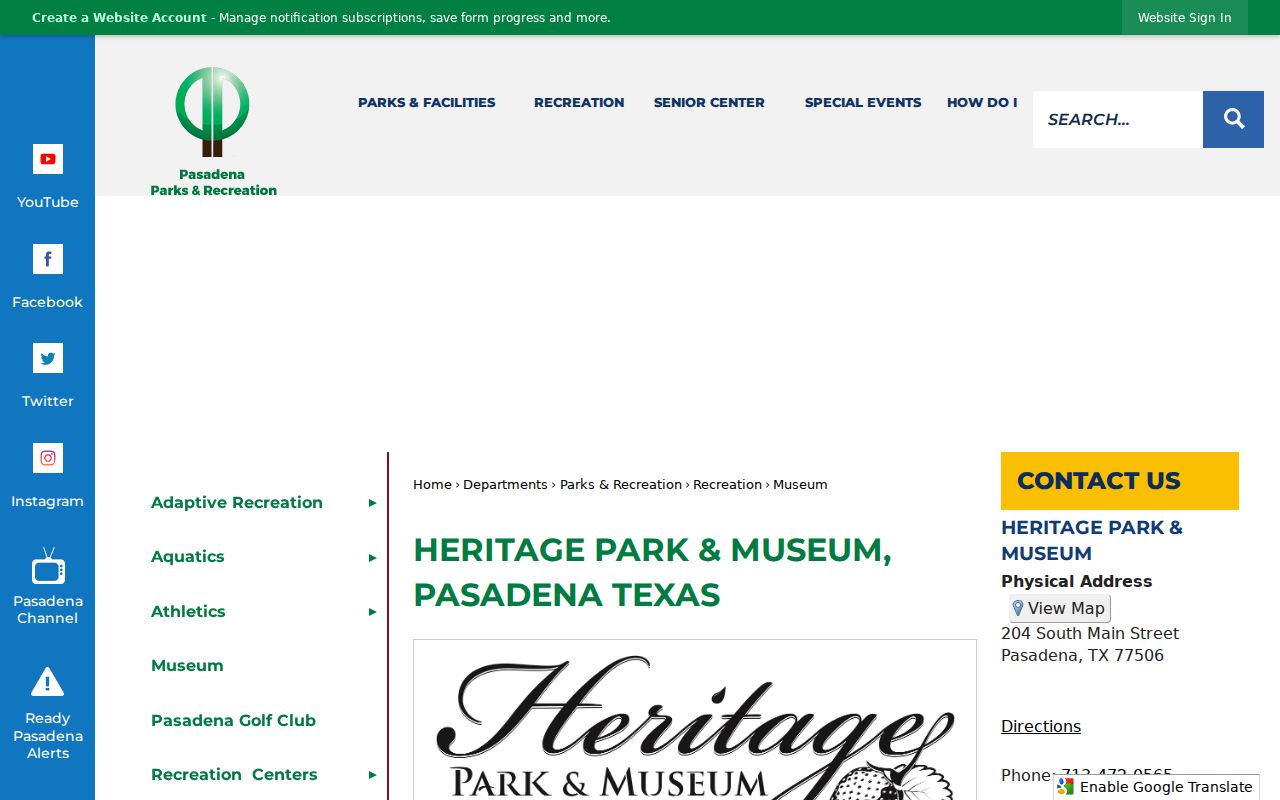
Museum interpretation is most useful as a starting point for a documented address or family question, not as a substitute for the dated records trail.
Note: Local-history interpretation adds context after a dated record connects the address or family to the topic.
Pasadena Previous Residents, Personal Use
Use the prior-resident trail for house history, family history, estate questions, reconnecting with a past community, or checking a property story. Keep living people’s privacy in mind. Do not use an address, historical directory entry, or deed trail to follow, contact, or harass a person. For a record that matters, verify the original with the custodian and note any redaction or access limit.