
Pasadena Historical Directory Collections
Pasadena Public Library is the confirmed starting point for historical directory work. Its staff can search historic Pasadena volumes, and the library’s public answer identifies 1948 through 1951 as an example of available years. Historic volumes are also available online through Ancestry Library Edition inside the library. That is useful access, but it does not establish a full run, a named publisher, or a reverse-address volume for every year. The collection has to be checked by edition before a researcher relies on it.
| Collection | Years | Where Held | Access |
|---|---|---|---|
| Historic Pasadena directory volumes | 1948–1951 confirmed example | Pasadena Public Library and Ancestry Library Edition | Library staff can search; historic online access is inside the library |
| Pasadena Museum research-library directory lead | “City Directories: 1914-” appears in an agenda attachment | Pasadena Museum of History Research Library and Archives lead | Inspect directly; no uninterrupted run or publisher list was verified |
| HeritageQuest and related genealogy databases | Platform coverage not enumerated in the sources | Pasadena Public Library databases | Check the live database and record the edition used |
| Federal population census | 1790–1950 | National Archives and digitization partners | Household comparison source; 1950 is the latest public census |
The important gap is plain: official open sources did not establish every surviving Pasadena directory year, every publisher, or a complete criss-cross run. The 1948–1951 example is verified, while the 1914 reference is a lead to examine, not proof that a volume exists for every year after 1914. A missing entry can mean an unlisted household, a changed name, a missing edition, or a search limitation.
Pasadena Directory Access
The Pasadena Public Library database collection brings together Texas State Library resources, HeritageQuest, Fold3 Library Edition, ProQuest African American Heritage, newspaper tools, and Ancestry access. Access conditions differ by service. The library notes Texas-resident access for some Ancestry material and directs users back to the library edition route when a commercial prompt appears. A directory record is best saved as a careful citation: city, edition year, page, spelling, street form, and the database or physical volume consulted.
The library’s city-directory answer is especially helpful when an online keyword search fails. Staff assistance is a documented access channel, and the directory tutorial gives a local route for preparing a search. Try a surname and given name first, then the city or street only when that particular edition shows an address index. Reverse lookup is edition-dependent, so it should never be assumed.
The Pasadena Public Library genealogy databases show the range of collections available for historical research.
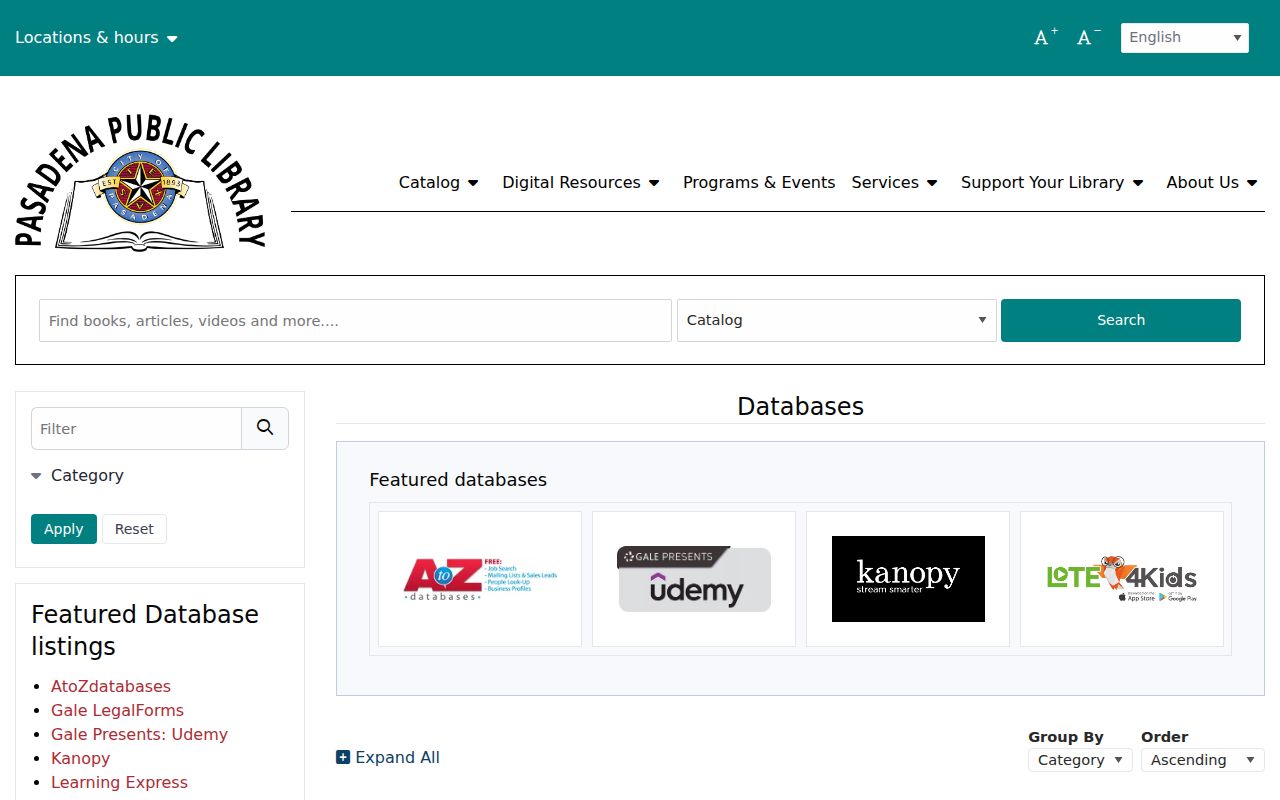
Use the database landing page to select the service that matches the date and record type, then preserve the edition details with any result.
Note: A library database can supply a useful search lead, but its searchable fields and image coverage can change by service and edition.
Read Pasadena Directory Entries
A historical directory entry is a snapshot taken for one edition. It is not a deed, and it is not a census count. Depending on the volume, a line may identify a telephone subscriber, a householder, a business, a spouse or widow notation, and a street address. The printed abbreviation key controls the meaning of its marks. Record that key before expanding a shorthand label into a conclusion. Do not treat a single line as proof that every household member lived at the address.
| Name | Record the spelling exactly, including initials and any spouse or widow notation. |
|---|---|
| Work notation | Copy the stated occupation, business, or employer reference only as printed. |
| Street address | Keep the house number, street spelling, directional form, and unit detail. |
| Telephone or subscriber clue | Note whether the volume appears to identify a subscriber rather than a full household. |
| Residence marker | Transcribe “r,” “h,” or another mark only after checking that edition’s key. |
- Criss-cross directory
- A directory arranged by street and address rather than mainly by surname. Its availability varies by edition.
- Householder index
- An address-oriented section that may list the principal named household or subscriber, not every person at the address.
- Abbreviation key
- The edition’s explanation of shortened terms and marks. It is the source for interpreting residence and family notations.
Pasadena Public Library’s historic-directory guidance identifies the verified local access route.
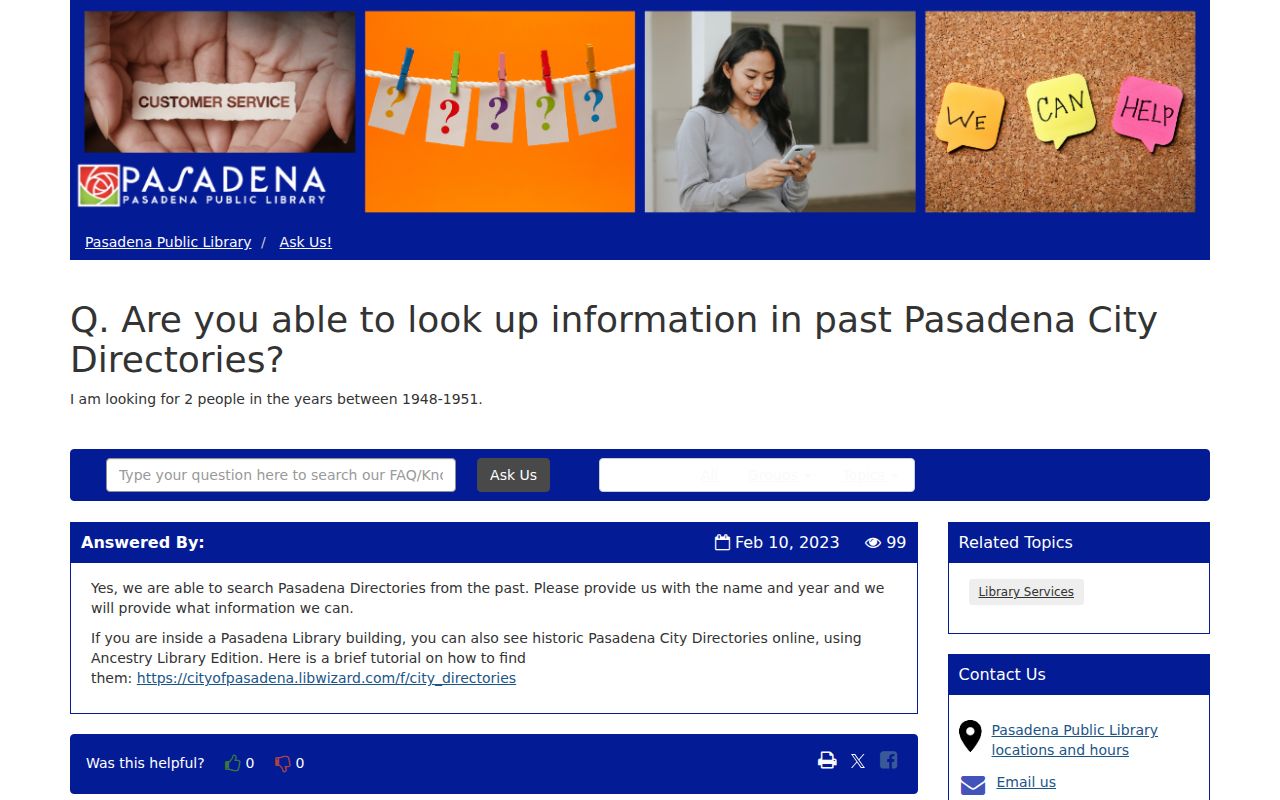
The verified 1948–1951 example supports a targeted request, while the exact content of each volume still needs to be checked at the library.
Pasadena Directories for Families
Family history becomes more reliable when the same person or address is followed across dated sources. Start with a directory edition that fits the known period, then compare it with the nearest available census. The federal census is public through 1950 under the National Archives’ 72-year rule. Census records can add household relationships, dwelling or address clues, and an enumeration context that a directory does not provide. A person who disappears from a directory may have moved, changed a listed name, died, become unlisted, or simply fall in a missing volume.
- Choose a directory edition and record its title, year, page, street spelling, and each relevant printed field.
- Check adjacent available editions for the same name and address, keeping each year separate.
- Test the street or householder section only if that edition actually contains one.
- Pair the dated entry with the nearest available federal census household and enumeration detail.
- Use a deed, probate record, tax roll, or local-history source to test whether the names describe an owner, an occupant, or another role.
HeritageQuest, which the library highlights for census, directories, and wills or probate, can help bridge these records. Fold3 Library Edition adds a separate military-research route. Neither resource converts a directory line into a continuous residence history. For an address-focused present-day record trail, the Pasadena street directory has the parcel and recorded-instrument workflow.
Pasadena Directory History Timeline
The library’s own moves give useful context for where Pasadena local-history material may have accumulated. They do not prove that a specific directory volume survived at every location. The dates below are institutional history, not a directory publication timeline.
- 1922: Pasadena’s library began at Pasadena High School with 100 books.
- 1939: The collection moved to City Hall.
- 1941: The library occupied Mrs. Ola Mae Kennedy’s home.
- April 18, 1962: The Minerva Street library opened with 15,000 books, 536 cards, and 61 hours of weekly service.
The library’s detailed history preserves those moves and names Ethel Hargrave as librarian from 1926 through 1946. They are useful context for a request to library staff, especially when a family or neighborhood lead is tied to an earlier period.
Note: Library moves show collection context, not a record of which directory volumes survived or remain available in every edition.
Pasadena Directory Archive Routes
When the library search does not resolve a household, historical county material provides a second route. The Harris County Archives research service is appointment-based and preserves permanent government records and private collections from more than 70 county offices. Ask by office, record type, date range, and the address or legal description already found. The Archives can be a better fit for older appraisal, court, tax-assessor, property, or map material than a modern name search.
Harris County Archives research information describes appointment-based access to historical county records.
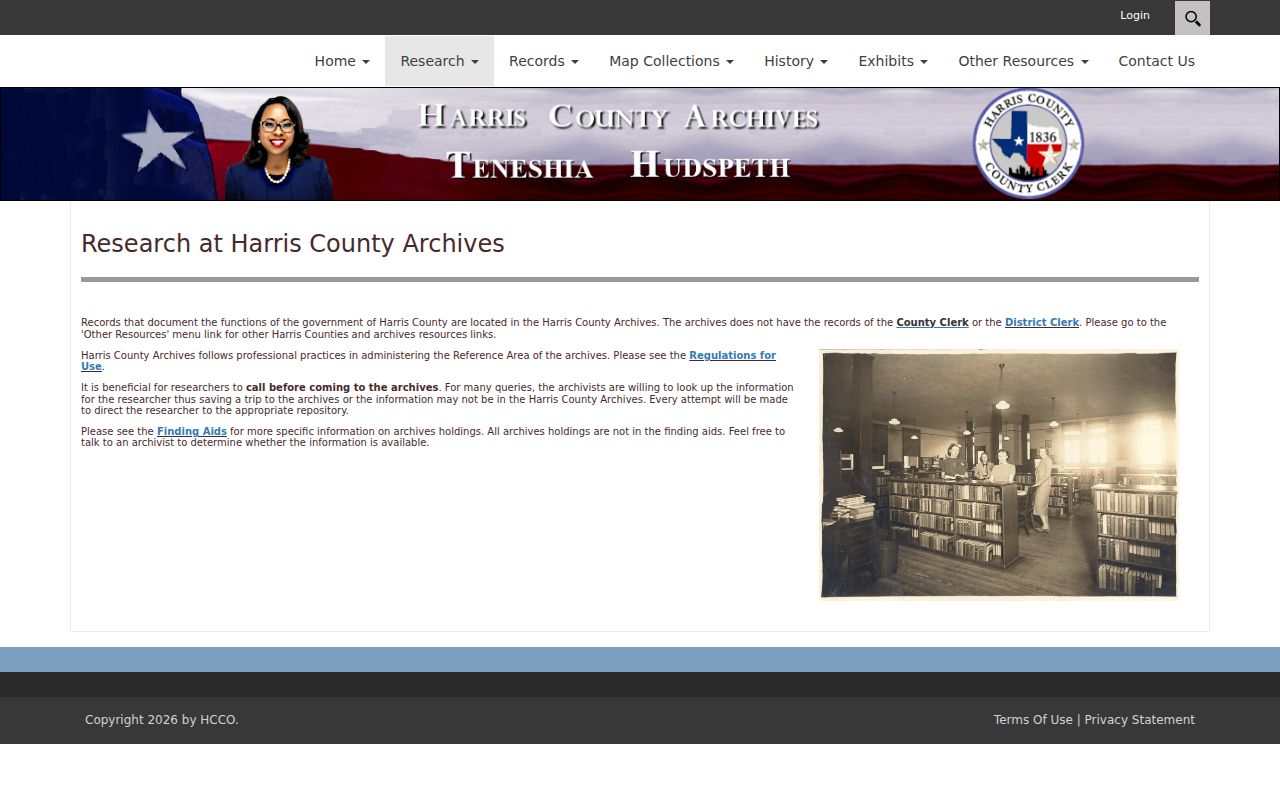
Bring the directory citation, variant spellings, and dated address to an appointment so the archival search can begin with a defined record trail.
The Texas State Library and Archives Commission inventory also identifies Harris County deeds, probate material, naturalization records, and tax rolls in reel and volume systems. Those materials are not city directories, but they can test family and property connections that appear in one.
Pasadena History Behind Entries
Directory lines make more sense when read against Pasadena’s changing local history. The city was founded in 1893, the railroad arrived in 1894, strawberry cultivation followed the 1900 hurricane recovery, and refineries were established by 1920. Later growth connected the city to the ship-channel and petrochemical corridor. A printed work notation or business address can reflect that era, but it should not be stretched into a biography without a second record.
Heritage Park and Museum offers another local-history route through the Pomeroy, Strawberry, Miss Anna, and Edna houses. These places can supply family or address context outside a portal search. Museum interpretation and a dated directory entry remain separate evidence, so note the source and date for each one.
Note: Historic places can suggest a research question, but a directory, census, deed, or probate record must still support a connection to a specific household.
Pasadena Directory Cross-Checks
A historical Pasadena directory should be read beside records that describe different roles. A County Clerk instrument names parties to a recorded transaction. A census records a household at a census date. A tax roll can place a name in a county tax record, but not prove residence. The library’s local news resources can add a dated mention, though the exact digitized Pasadena Citizen run and page-search coverage were not verified in the research. Preserve the source date, page, spelling, and field meaning with every finding.
Printed directories are also limited by their own compilation method. A telephone subscriber may differ from the person who owned a property, and a householder entry may omit other residents. No named sample from the subscription interface was retained in the research, so no personal sample is presented here. That restraint avoids inventing a record and keeps the focus on the documented entry fields.
Pasadena Directory Limits
Use historical directory records for family history, reconnecting with a past community, estate questions, and careful local-history research. Do not use a historical address or name to contact, follow, or harass a living person. When evidence matters, seek the original edition or image and verify it with the custodian that holds the companion record.